
“How much does SIP trunking cost?” It depends. This is because you don’t pay a fixed fee per seat; instead, your monthly bill is shaped by several key factors: how many channels (concurrent calls) you need, how many minutes you use, where you call, and which extras (numbers, routing, support) you add. Because of this flexibility, SIP can be very affordable depending on usage.

This article breaks down all the variables that influence SIP trunking cost, explains the common pricing models, shows you how to estimate your own monthly bill, and helps you compare providers with confidence.

Jump To

Quick Takeaway: How Much Does SIP Trunking Cost?

Here are the highlights of this article to have a quick overview of the SIP Trunking costs.

  • Typical Costs: SIP trunking can cost anywhere from $10 to $25 per channel/month, or $0.005 to $0.02 per minute on metered plans. With Telxi, you can start with 4 included channels and no fixed monthly fee, paying only for what you use.

  • Pricing Models: Most providers offer either pay-as-you-go (metered) or flat-rate per channel (unmetered) pricing. The most important thing is to focus on flexible, usage-based pricing with transparent rates and no hidden minimums.

  • What Affects the Price: Your final monthly cost depends on how many concurrent calls (channels) you need, how many minutes you use, and any extras like DIDs, toll-free numbers, or international routing.

  • How to Estimate Costs: To get a close estimate, consider your peak concurrent calls and monthly usage. Then apply per-channel or per-minute pricing based on your needs.

  • How to Compare Providers: Don’t just look at the channel price; compare total monthly cost, including call rates, features, and any setup or porting fees.

Main Questions When Talking About SIP Trunking Pricing

  • SIP trunking connects your business phone system (PBX) to the public telephone network using the internet, instead of physical phone lines. It allows you to make and receive calls through virtual channels that scale with your needs. Voice data is transmitted in digital packets, making the setup more flexible and cost-efficient than traditional telecom.

  • Elastic SIP trunking lets you pay based on usage — scaling channels and costs as needed. It’s ideal for businesses with fluctuating call volumes. “Unlimited” SIP trunking offers flat-rate pricing, but often comes with fair use limits or restrictions. Elastic models like Telxi’s offer more flexibility and cost control.

  • SIP trunking is more scalable, cost-effective, and flexible than PRI. It doesn’t require physical circuits, allows for unlimited channels over a single internet connection, and supports modern features like cloud integration and remote work. Most businesses save 40–70% when switching from PRI to SIP.

SIP Trunking Vs Traditional Phone Line?

SIP trunking is far more cost-effective than traditional phone lines. Businesses often save between 30% and 60% when switching to SIP, thanks to lower infrastructure costs, flexible pricing, and internet-based routing.

SIP Trunking vs Traditional Phone Lines: Cost Comparison

FeatureTraditional Phone Lines (PRI/Analog)SIP Trunking
Channel Capacity23 channels per PRI line (fixed)Scalable from 1 channel and up
ScalabilityRequires new circuits or hardwareAdd/remove channels instantly
Monthly FeesHigh fixed line costsPay-as-you-go or per-channel pricing
Call RatesOften bundled or inflatedTransparent per-minute pricing
Long-Distance ChargesCan be expensiveLower, internet-based international rates
Setup CostsHardware and installation feesMinimal to none (e.g., Telxi: $0 setup)
MaintenanceOn-site hardware maintenance requiredManaged in the cloud, minimal upkeep
Flexibility for Remote WorkLimited or complex setupEasily supports remote and hybrid teams

What Exactly Are You Paying for With SIP Trunking?

Understanding what goes into your SIP trunking cost is the first step to managing it. Let’s break down the core components that shape your monthly costs — from channels and calls to numbers and optional features.
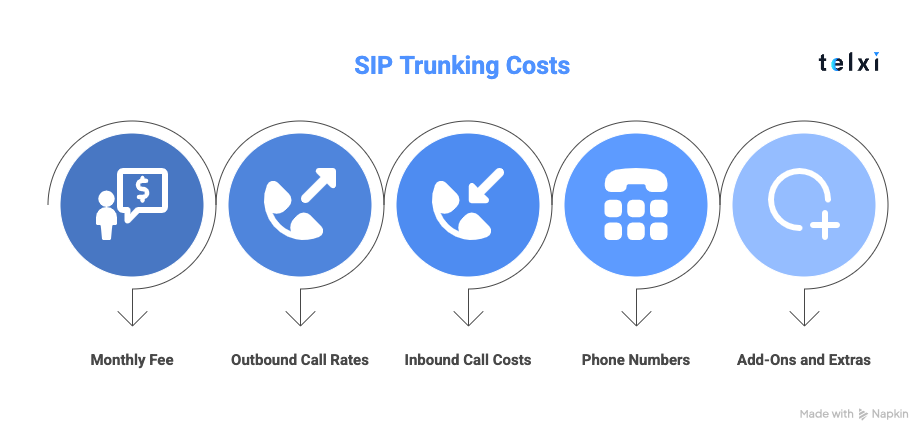
sip trunking cost

  • Monthly Fee per Channel or Trunk: Many providers charge a flat monthly rate per SIP channel, usually ranging from $10 to $25 per channel.
  • Outbound Call Rates (Local, Mobile, International): Call rates are usually billed per minute and vary by destination. And use a 60/60 or 6/6 billing increment method.
  • Inbound Call Costs (If Any): Some providers charge for inbound calls, especially when using toll-free numbers. With Telxi, standard inbound traffic to your DIDs is included with your usage, though toll-free and international numbers may have different rate structures.
  • Phone Numbers (DIDs, Toll-Free, Mobile): Direct Inward Dialing (DID) numbers are typically billed monthly. These number costs are separate from call usage and are billed per active line.
  • Add-Ons and Extras: Optional features like fraud prevention tools, call encryption, premium call routing, or advanced analytics can add to your bill.

What Are the Different SIP Trunking Pricing Models?

There is a range of billing models to suit different business sizes, usage levels, and operational needs. The most common models for SIP Trunking cost are: per-channel pricing, Pay-as-you-go, bundled minute packages, “unlimited” plans, and, in some cases, hybrid plans combining fixed and variable elements. Here is a breakdown of each one:

Per-Channel Pricing (Flat Monthly Rate)

This is one of the most common SIP trunking models. You pay a fixed monthly fee for each active SIP channel, regardless of how many minutes you use. This model is easy to budget and works well for businesses with consistent, predictable call volumes.

For example, if you need 10 concurrent call paths and your provider charges $20 per channel, your base cost would be $200/month and calls may be included or billed separately, depending on the plan.

Best for: medium-sized offices, internal teams with stable usage, or companies that prefer cost predictability.

Pay-As-You-Go (Metered Usage-Based Billing)

In this model, you pay based on actual call usage, usually per minute. Some providers still include a small number of base channels, and then bill outbound and inbound calls separately based on destination.

Rates typically range from $0.005 to $0.02 per minute, depending on whether you’re calling locally, nationally, or internationally.

Best for: small businesses, startups, or seasonal teams with variable or low call volume.

Bundled Minute Packages

Some providers offer plans with a fixed number of included minutes per month. They are often split by destination (e.g., 2,000 US minutes + 500 Canada minutes). Once you exceed the bundle, you pay per minute for overages.

This model gives you some predictability while still tying pricing to volume.

Best for: businesses that want to control costs without committing to flat-rate channels but have reasonably consistent usage.

“Unlimited” Plans

These plans usually come with a fair use policy (FUP) that sets soft limits on the number of minutes or concurrent calls per channel. Providers may throttle service or charge overage fees if you exceed those thresholds.

Be cautious of fine print in these plans, especially for high-volume or outbound-heavy operations.

Best for: small offices with moderate usage and a need for price stability.

Hybrid Pricing Models

Some providers combine fixed and variable elements: charging a base monthly fee for a small number of channels or minutes, then layering in usage-based pricing for anything beyond. For instance, you might pay $50/month for 5 channels + a per-minute rate for outbound calls over 1,000 minutes.

This model offers flexibility with a more controlled monthly minimum.

Best for: growing businesses that expect to scale, or teams with unpredictable but rising call volumes.

SIP Trunking Cost Models: Which One Fits Your Business?

Pricing ModelBest For
Per-Channel PricingMedium-sized businesses with predictable call volumes
Pay-As-You-Go (Metered)Startups, small teams, or seasonal businesses with low or variable usage
Bundled Minute PackagesBusinesses with consistent but moderate usage seeking cost predictability
Unlimited PlansSmall offices with steady call activity and low outbound volume
Hybrid Pricing ModelsGrowing companies needing flexibility with some budget control

What Factors Influence in the SIP Trunking Cost?

Your SIP Trunking cost can vary depending on usage, call types, destinations, and how your system is configured. Here are the most important cost factors to consider:

  • Number of Concurrent Calls (SIP Channels):
    Each simultaneous call requires a SIP channel. If your team often handles multiple calls at once, you’ll need more channels — which increases costs. A good baseline is one channel per 3–4 users.

  • Monthly Call Volume (Minutes Used):
    If you’re on a metered or hybrid plan, the number of outbound minutes heavily affects your final price. Even with “unlimited” plans, usage caps or fair use policies may apply.

  • Call Destinations (Local, Mobile, International):
    Local landline calls are generally the cheapest, while mobile and international calls cost more. If you frequently call overseas, expect higher per-minute charges based on destination.

  • Call Quality & Routing Preferences:
    Some businesses opt for premium routing for better call clarity and reduced latency. This often costs more but is essential for customer-facing or high-volume teams.

  • Redundancy & Failover Setup:
    Adding backup trunks or geo-redundant routing improves reliability — but may come with extra charges. These are ideal for businesses that can’t afford downtime.

  • Billing Terms & Commitments:
    Contract length, minimum spend requirements, and billing cycles can all influence your costs. Telxi keeps it simple with monthly billing, no usage minimums, and full transparency.

How Can You Estimate Your SIP Trunking Costs?

To have a clear idea of your SIP Trunking cost, you need to consider the peak concurrent calls, define your monthly volume, identify your call destinations, and the virtual numbers you will need. Here are the key steps to create a realistic forecast based on your business’s unique usage.
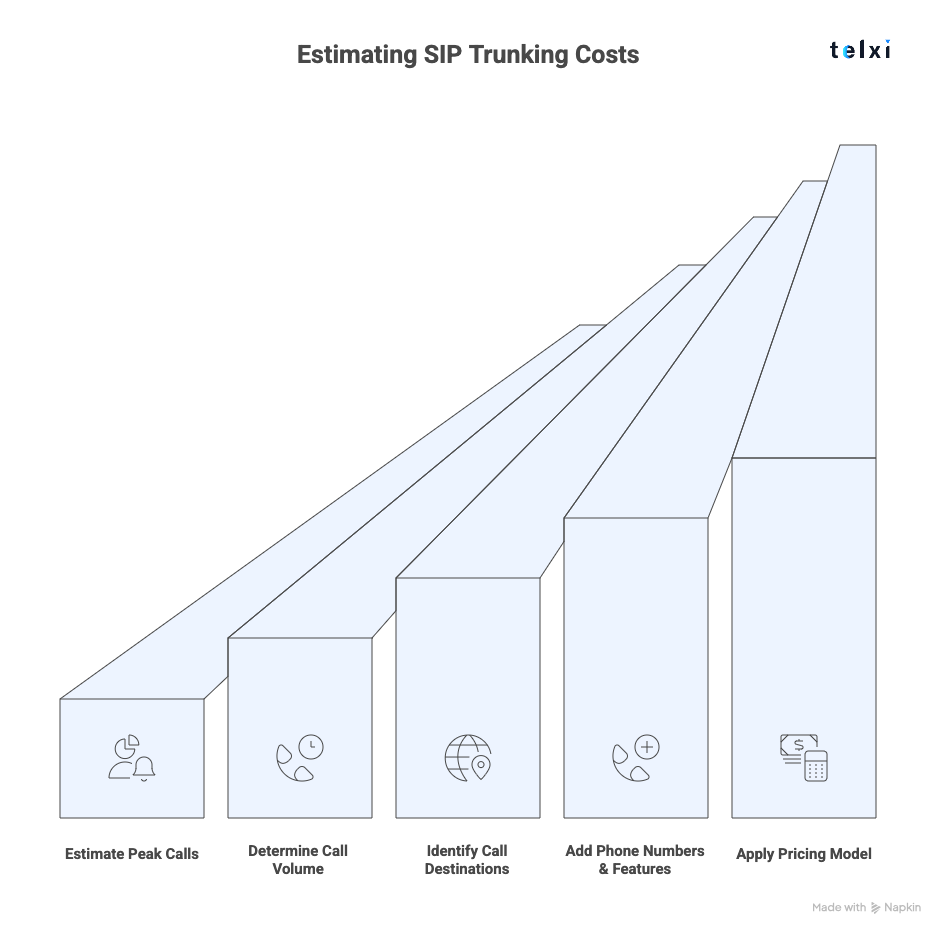
how to estimate sip trunking cost

Step 1: Estimate Peak Concurrent Calls

Start by figuring out how many simultaneous calls you need during your busiest periods. This determines the number of SIP channels required. For general office use, a good rule is one channel for every 3 to 4 employees. If you’re running a call center or support team, you may need a 1:1 or 1:2 ratio.

Example: A company with 30 employees and a moderate call volume might need 8–10 channels.

Step 2: Determine Your Monthly Call Volume (Minutes)

Estimate how many minutes of calling your team does each month — both inbound and outbound. Focus especially on outbound minutes, since they’re more likely to be billed under pay-as-you-go or bundled models. Break this down by destination if possible (e.g., domestic, mobile, international).

Tip: Review recent phone bills or analytics if you’re migrating from another system.

Step 3: Identify Call Destinations

Pricing varies widely depending on where you’re calling. Domestic landline calls are usually cheapest, mobile rates are slightly higher, and international calls can vary significantly by country.

Example: A U.S. business that mostly calls U.S. and Canadian numbers will pay less than one that regularly calls Europe or Asia.

Step 4: Add Required Phone Numbers and Features

Include any direct inward dial (DID) numbers, toll-free lines, or additional services you need (e.g., fax support, failover routing, encryption). Each of these adds a small, recurring monthly fee.

Telxi Example: Local or toll-free numbers are billed monthly and can be provisioned instantly or ported over without setup fees.

Step 5: Apply Pricing Based on Your Provider’s Model

Now calculate:

  • Channels x channel fee

  • Outbound minutes x per-minute rate

  • Monthly DID or toll-free charges

  • Add-ons or optional service costs

Add these together to calculate the projected monthly cost.


How Do You Choose the Right SIP Trunking Plan and Provider?

We talked about SIP Trunking cost, but When choosing a provider, the most important aspects to consider are cost, quality, flexibility, and support. To make the right choice, you need to evaluate both the pricing structure and the service capabilities behind it.

best sip trunking providers article

Start by considering your priorities: Do you need maximum cost control? Are you scaling a call center that demands international quality? Does your business require local DIDs in multiple countries?

Questions to Ask Any SIP Trunking Provider Before You Sign

  • What’s the total monthly cost per channel?

  • How are domestic and international calls billed, and are rates clearly published?

  • Are features like call routing, call recording, and E911 service included or extra?

  • What kind of support is available — is it 24/7 and included in the price?

  • Can I scale my SIP channels up or down easily, and how quickly can changes be made?

  • Do you offer a month-to-month option, or are long-term contracts required?

  • Is there a web portal where I can manage numbers, usage, and billing in real time?

How Do SIP Trunking Providers Compare on Pricing and Value?

When comparing SIP trunking providers, it’s not just about finding the lowest per-channel rate — it’s about understanding what you get for the price. The best providers combine fair, flexible pricing with transparent terms, strong call quality, and reliable support.

Some advertise aggressive pricing but include hidden fees, usage caps, or offer minimal support. Others might charge a bit more but provide better infrastructure, fewer restrictions, and easier scalability. Below is a comparison of several well-known SIP providers to help you see how they stack up across critical pricing factors.

Estimates based on publicly available pricing and plan structures. Always confirm with the provider directly for the latest terms.

ProviderChannel CostPer-Minute RatesSetup FeesContract RequiredIncluded ChannelsNotable Extras
TelxiFrom $0 (4 included)Transparent per-regionNoneNo4Pay-as-you-go, global DIDs, no usage minimums
TwilioN/A (usage-only model)From $0.0075 (US outbound)NoneNoN/AAPI-focused, great for developers
Nextiva~$15–$25Limited public infoMay applyYes (often annual)VariesBundled plans, includes support
RingCentral~$20–$30Region-based, not detailedMay applyYesVariesUnified comms suite, volume discounts
SIP.US~$24.95 per channel~$0.01–$0.02 outboundMinimalNo1Metered model, US-centric
VoIP.msUsage-based~$0.005–$0.02 outboundNoneNoN/ALow-cost, high control, BYO setup

Why Companies Choose Telxi?

Telxi offers a powerful, flexible SIP trunking platform that delivers global voice connectivity:

  • Global-Grade Voice Infrastructure
    Telxi delivers reliable call quality across 100+ countries through Tier 1 carriers — perfect for businesses operating internationally or scaling fast.

  • Instant Provisioning & Scalability
    Set up trunks in minutes and scale channels up or down without hardware, contracts, or long lead times. Telxi adapts to your pace, not the other way around.

  • Transparent, Predictable Pricing
    No setup fees, no fine print — just clear per-channel and usage-based rates. You always know what you’re paying and why.

  • Enterprise-Grade Security & Compliance
    With built-in TLS/SRTP encryption, SBC protection, and 24/7 fraud monitoring, Telxi keeps your voice traffic secure and compliant with global regulations like GDPR and HIPAA.

  • Real Human Support, 24/7
    Whether you’re troubleshooting or scaling, Telxi’s team is available anytime — no tickets, no tiers, just real help when you need it.

  • Ready for SaaS & API-Driven Stacks
    Telxi integrates with modern PBXs, CRMs, UCaaS platforms, and custom applications — perfect for businesses running on cloud and automation.

I chose Telxi for my SIP trunk DID number provider after reviewing a number of its competitors. They don’t have any monthly minimum charges and you pay as you go. Only $1 a month for a DID number with no monthly minimums made Telxi my choice. After testing it for couple of days I found it working great. I configured it with my FREE 3CX (10 Users) account and got myself a free hosted Phone System. That’s awesome! Trustpilot Review

Looking for a SIP Trunking Provider?

If you’re ready to modernise your business communications, we make the transition simple. Whether you’re migrating from legacy systems, expanding globally, or just tired of overpaying for underwhelming voice service, we give you the infrastructure, support, and transparency to communicate smarter.

FAQs About SIP Trunking Cost

  • A SIP trunk can support as many channels as you need — it’s entirely virtual. Unlike traditional PRI lines, which are capped at 23 channels per trunk, SIP trunks scale dynamically. You can start with just a few and add more instantly based on your concurrent call needs.

  • Yes — when properly configured with a reliable provider and a stable internet connection, SIP trunks can deliver equal or better call quality than traditional lines. Features like premium routing, QoS (Quality of Service), and encrypted connections help ensure crystal-clear voice.

  • While some providers offer free trials or limited test environments, fully free SIP trunking for business use is rare and usually comes with major trade-offs in reliability, support, or features. For production use, it’s better to choose a trusted provider with transparent pricing and no hidden costs.